
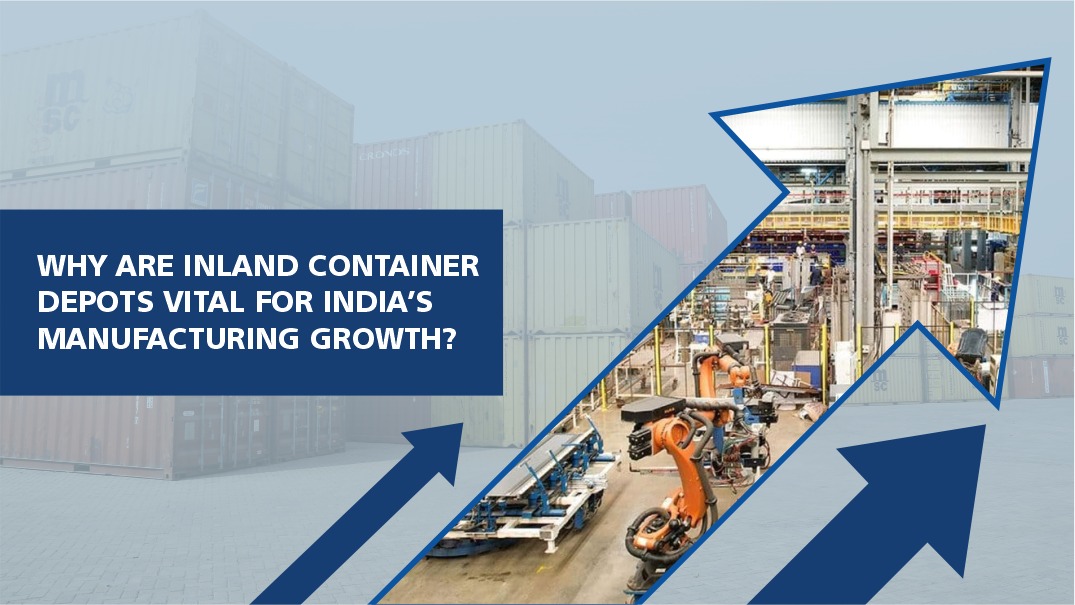
Why Are Inland Container Depots Vital for India’s Manufacturing Growth?
India’s manufacturing landscape is undergoing a steady shift toward higher productivity, global competitiveness and structured logistics. Inland container depots (ICDs) play a central role in this transition by connecting factories with global markets, improving operational control and supporting better supply chain economics. This blog explains why ICDs are increasingly essential for India’s manufacturing growth and how they strengthen the movement of goods from production floors to international destinations.
What Are Inland Container Depots (ICDs) and Their Manufacturing Role?
Inland container depots function as dry ports located away from coastal gateways. They support handling, storage, customs clearance and movement of containers. Their role in ICD manufacturing support has grown significantly due to the rising involvement of Indian manufacturing companies in global value chains.
Key functions of ICDs for manufacturers:
- Container handling for import and export shipments
- Consolidation and deconsolidation of shipment
- Availability of customs clearance services close to industrial hubs
- Storage and safe handling of raw materials and finished goods
- Access to multimodal transport for smooth distribution
The Link Between ICDs and Reduced Supply Chain Costs for Manufacturers
Manufacturers face pressure to control production and distribution costs. ICDs help reduce overall supply chain expenses in several ways:
- Shorter transport routes for container movement from factories to ICDs
- Lower fuel consumption compared with long-haul trips to coastal ports
- Reduced holding costs due to organized storage and faster processing
- Optimized multimodal routing that improves cost efficiency
This structure benefits both large units and those relying on inventory systems for small business operations.
How ICDs Enhance Export Competitiveness for Indian Manufacturing Units
India’s manufacturing exports depend on predictable schedules, shipment visibility and timely clearances. ICDs act as stabilizing points in the supply chain.
Export advantages supported by ICDs:
- Faster documentation and customs activities handled closer to manufacturing zones
- Efficient container stuffing and sealing at the depot
- Reduced turnaround time for export-bound shipment
- Standardized processes that match global trade requirements
As a result, Indian manufacturing companies gain stronger control over lead times, improving their competitiveness in global markets.
How ICDs Help Manufacturers Overcome Port Congestion Challenges
Major ports often experience congestion due to high shipment volumes. ICDs help manufacturers avoid such bottlenecks by acting as alternative processing hubs before the shipment reaches ports.
Benefits include:
- Smoother flow of vehicles and shipment due to decentralized handling
- Reduced waiting time at coastal terminals
- Ability to complete customs-related checks away from busy port areas
- Better planning of vessel connections through early shipment readiness
ICDs support continuous movement and minimize delays that could disrupt manufacturing practices or delivery commitments.
Importance of Multimodal Connectivity for Manufacturing Supply Chains
Strong multimodal connectivity is critical for any manufacturing-driven logistics ecosystem. ICDs form a link between road, rail and port infrastructure, ensuring dependable shipment transitions.
Multimodal advantages for manufacturers:
- Rail connectivity for long-distance movement of bulk shipment
- Road networks supporting regional distribution
- Efficient linkages to port terminals for export and import cycles
- Balanced routing options during supply chain disruptions
This integrated model ensures flexible and reliable logistics arrangements that align with India’s manufacturing growth agenda.
How ICDs Enable Faster Customs Clearance for Manufacturing Exports
Customs clearance remains a sensitive step for exporters. Any delay directly impacts production schedules and delivery timelines. ICDs streamline this process through dedicated customs facilities within the depot.
Clearance benefits include:
- On-site examination zones for faster processing
- Availability of customs officials to manage documentation
- Reduced dependency on port-level clearance queues
- Smoother coordination for both export and import shipments
Such predictability allows manufacturing units to maintain steady dispatch cycles.
Impact of ICDs on Inventory Management and Storage for Manufacturers
Effective inventory management is crucial for both large factories and small businesses. ICDs offer organized storage, making them valuable for manufacturing units dealing with fluctuating production and shipment needs.
Inventory-related advantages:
- Storage options for raw materials and finished goods
- Support for small business inventory management through structured warehousing
- Better stock control due to close proximity to production clusters
- Reduced risk of damage or loss due to secure handling practices
ICDs contribute to more stable planning and less volatility in production cycles.
Future Prospects: Expanding ICD Infrastructure to Meet Growing Manufacturing Needs
India’s manufacturing ambitions require expanded ICD infrastructure that aligns with new industrial corridors, export clusters and multimodal logistics parks.
Future developments likely to include:
- Higher-capacity container yards
- Integrated digital platforms for real-time shipment visibility
- Rail-based ICD expansion across emerging manufacturing zones
- Larger warehousing clusters supporting inventory-intensive industries
These advancements will match the scale of India’s global manufacturing aspirations.
How ICDs Contribute to India’s Vision of Manufacturing Self-Reliance (Atmanirbhar Bharat)
ICDs support self-reliance by strengthening domestic production and facilitating trade without structural bottlenecks.
Key contributions:
- Improving access to global markets for regional manufacturers
- Developing logistics resilience independent of coastal congestion
- Supporting domestic supply chains with reliable transport connectivity
- Enhancing export readiness for new and emerging industries
Their role fits India’s broader objective of building a strong, self-sustaining manufacturing economy.
Conclusion: ICDs as Pillars of India’s Manufacturing Industries Development
Inland container depots have become integral to India’s manufacturing momentum. Their ability to streamline customs clearance, reduce logistics costs, support inventory management and provide multimodal connectivity strengthens every stage of the production-to-export journey. ICD manufacturing support continues to shape the competitiveness of Indian manufacturing companies and ensures that India advances steadily toward a more efficient and globally connected industrial ecosystem.