
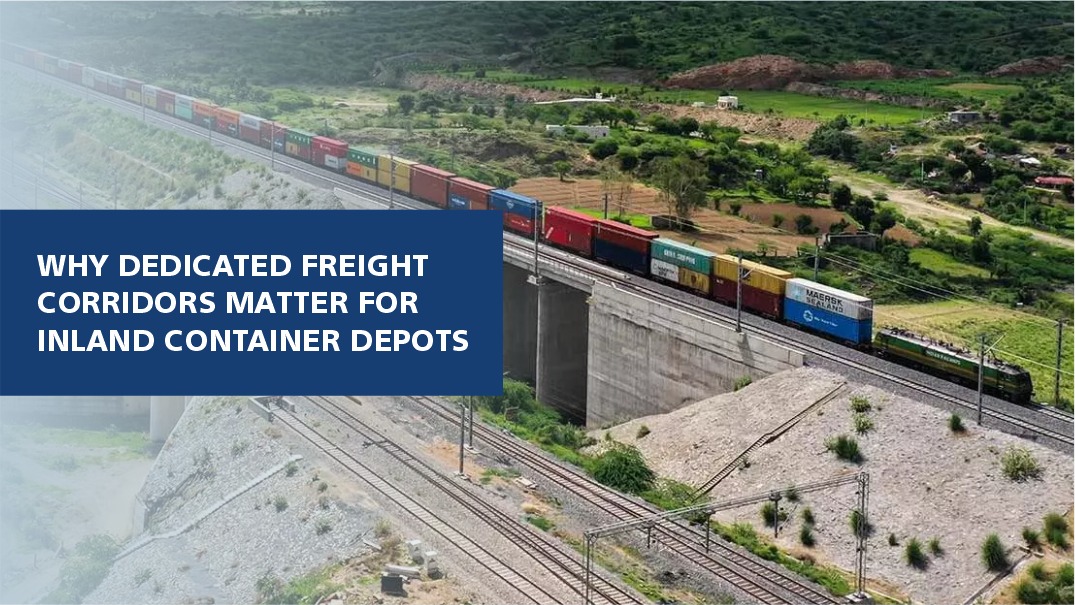
Why Dedicated Freight Corridors Matter for Inland Container Depots
Dedicated Freight Corridors (DFCs) have emerged as a decisive infrastructure upgrade in Indian logistics, directly shaping the performance and competitiveness of Inland Container Depots (ICDs). Purpose-built for high-capacity freight transport, these corridors enable a structured flow of shipment between production clusters, dry ports and seaports, strengthening supply chain management, enhancing reliability and supporting multi modal logistics across the country.
What Are Dedicated Freight Corridors (DFCs)?
Dedicated Freight Corridors are exclusive rail networks designed to carry freight trains at higher speeds, longer lengths and greater axle loads than conventional railway lines. These corridors separate shipment movement from passenger operations, creating a streamlined, high-efficiency environment for goods transport.
Key elements include:
- High-capacity tracks engineered for containers
- Automated signaling and real-time monitoring
- Integrated terminals for smoother shipment handling
- Seamless links to road, rail and port systems
DFCs represent a major step toward modernizing freight corridor India infrastructure and building scalable transport capacity for expanding industrial demand.
Overview of the Eastern and Western Dedicated Freight Corridors in India
India’s DFC programme currently includes two major corridors:
Western Dedicated Freight Corridor (WDFC)
Connects Dadri in Uttar Pradesh to the Jawaharlal Nehru Port in Maharashtra. Designed to facilitate containerized shipment flow between northern industrial hubs and western ports.
Eastern Dedicated Freight Corridor (EDFC)
Runs from Ludhiana in Punjab to Sonnagar in Bihar. Supports high-volume bulk shipment such as minerals, food grains and raw materials.
Corridor Snapshot
| Corridor | Length | Major shipment Type | Key Benefit to ICDs |
|---|---|---|---|
| WDFC | ~1,500 km | Containers, high-value goods | Faster port–ICD connectivity |
| EDFC | ~1,337 km | Bulk shipment, minerals | Efficient long-haul movement |
Both corridors form the backbone of freight transport and create a strong foundation for next-generation supply chain movement across India.
How Do DFCs Enhance Freight Transport Efficiency?
DFCs upgrade operational capacity and reduce bottlenecks through:
- Higher train speeds (up to 100 km/h for freight)
- Longer train lengths with increased payloads
- Reduction in detention and crossing delays
- Automated traffic management systems
The improved operational environment directly impacts transit efficiency for ICDs handling both domestic and export-import shipment.
Impact of DFCs on Transit Time Reduction for Inland Container Depots
DFCs sharply cut transit times between ICDs and ports. For example, shipment movement between NCR-based ICDs and the western ports, traditionally taking 50–60 hours, now moves significantly faster because of uninterrupted freight paths.
Benefits include:
- Lower turnaround time for containers
- Efficient scheduling for rail rakes
- Higher throughput for ICDs handling export-driven shipment
- Improved cost structures for freight companies
Transit optimization strengthens the overall performance of ICDs in competitive global supply chains.
Improved Service Reliability and Predictability With DFCs
ICDs depend on predictable shipment movement to plan container dispatch operations. DFCs elevate reliability by offering:
- Fixed freight windows
- Minimal operational disruptions
- Consistent departures and arrivals
- Lower variability in dwell time
This stability supports dependable supply chain management and builds confidence among manufacturers and exporters.
Role of DFCs in Decongesting Traditional Rail and Road Networks
Traditional mixed-use tracks often slow down freight due to passenger priority. DFCs reduce this pressure and allow:
- Faster movement of shipment trains
- Reduction in road-based long-haul traffic
- Better utilization of national rail capacity
- Lower congestion around industrial belts and ports
This creates an efficient ecosystem supporting sustainable growth in Indian logistics.
How DFCs Connect Inland Container Depots to Major Ports and Industrial Hubs
DFCs act as direct connectors between ICDs, industrial clusters and key ports.
Linkage Advantages:
- Smooth integration with port terminals
- Improved access to manufacturing zones
- Strengthened dry port operations for hinterland regions
- Reduced dependency on long-haul trucking
For ICDs situated in major hinterland locations, DFCs deliver efficient evacuation routes that support high-volume movement.
How Businesses Benefit From the Integration of ICDs and DFCs
Businesses gain measurable advantages:
- Reduced logistics cost
- Lower transit risks
- Improved port connectivity
- Higher availability of containers
- Better planning through predictable movement
Exporters and manufacturers particularly benefit from reliable and structured freight corridor India connectivity.
The Impact of DFCs on Supply Chain Resilience and Business Growth
Strengthened resilience comes from:
- Lower disruptions due to weather or congestion
- Reduced vulnerability to road transport fluctuations
- Stable rail-based movement during peak seasons
- Enhanced predictability in multi-country supply chains
Innovations Enabled by DFCs: Double Stack Containers and Trucks-on-Trains (ToT)
DFCs support new freight innovations:
- **Double Stack Containers:** Allows two containers stacked vertically, maximizing capacity and reducing cost per container.
- **Trucks-on-Trains (ToT):** Moves loaded trucks on wagons, enabling faster long-distance haulage and reducing fuel use.
These innovations strengthen multi modal logistics and expand the operating capabilities of ICDs.
Challenges and Solutions in Implementing Dedicated Freight Corridors
Key Challenges
- Land acquisition complexities
- Integration with existing railway networks
- High initial capital investments
- Need for advanced technology and terminal upgrades
Solutions
- Government’ policy support for faster clearances
- Modernization of rail-linked ICDs
- Use of digital technologies for shipment visibility
- Public–private partnerships for terminal development
These solutions ensure smooth alignment between DFCs and ICD operations.
Future Prospects: Expansion Plans and Expected Impact on Indian Logistics
Upcoming plans include:
- Extension of DFCs toward southern and eastern ports
- Development of new feeder routes connecting more ICDs
- Integration with upcoming industrial corridors
- Increased adoption of digital freight systems
As DFC in India expands, the benefits will multiply for the broader logistics network, including new dry ports and emerging industrial zones.
Conclusion: The Strategic Importance of Dedicated Freight Corridors for India’s Inland Container Depots
Dedicated Freight Corridors represent a foundational upgrade in India’s logistics capability. Their impact on ICDs is significant for faster connectivity, better reliability, reduced congestion and strengthened integration with ports. With continued expansion, DFCs are set to strenghthen the movement of goods or container enabling a more efficient, resilient and future-ready supply chain for the country.