
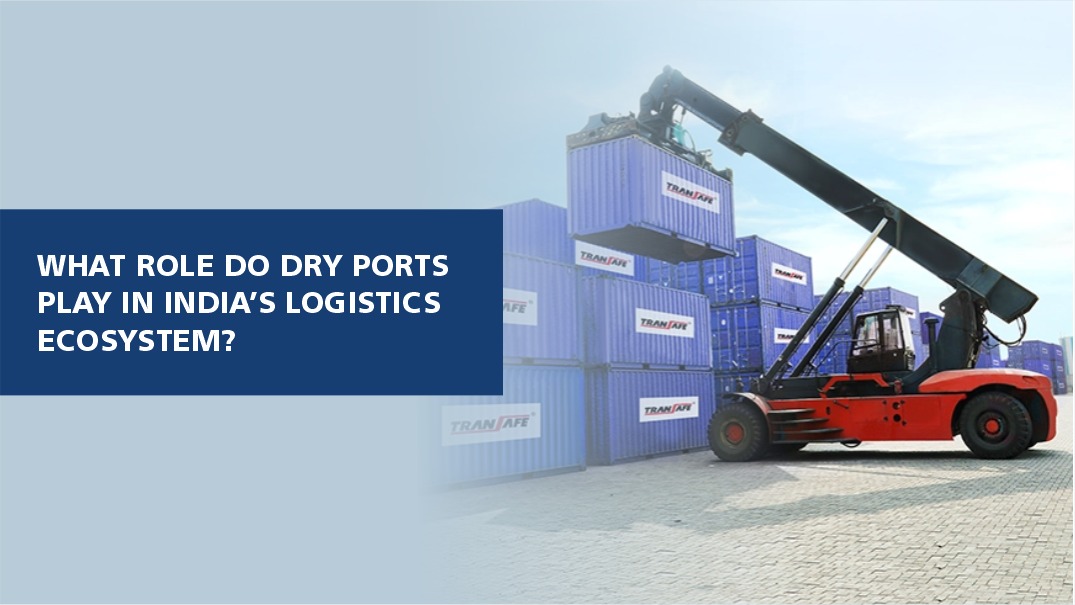
What Role Do Dry Ports Play in India’s Logistics Ecosystem?
Dry ports now stand as critical anchors in India’s logistics network to support the both domestics and EXIM shipment. These inland hubs keep shipment moving smoothly, connect the hinterland with major seaports and support steady trade flows. Their role spans multimodal logistics, supply chain optimization and dependable shipment handling for exporters and importers, making them essential to efficient nationwide movement.
What Is a Dry Port and How Does It Function?
A dry port is an inland intermodal terminal connected directly to major seaports through rail or road networks. It operates as an extension of the seaport, allowing shippers to move shipment closer to production locations.
Functions include:
- Handling import and export containers
- Conducting customs clearance and documentation
- Facilitating shipment consolidation and deconsolidation
- Providing storage, warehousing and value-added services
- Offering multimodal connectivity through rail and road
Dry ports in India work as fully equipped logistics hubs designed to handle international shipment without requiring direct access to the coastline.
Key Differences Between Dry Ports and Seaports
| Aspect | Dry Ports | Seaports |
|---|---|---|
| Location | Inland, close to production clusters and consumption zones | Coastal regions |
| Connectivity | Road and rail to seaports | Maritime connectivity and inland transport links |
| Role | Acts as a satellite port handling customs and shipment processes | Primary gateway for international maritime trade |
| Processing | Focus on documentation, storage and flow management | Vessel handling, container loading/unloading |
How Dry Ports Help Decongest Major Seaports in India
Crowding at seaports affects overall trade efficiency. Dry ports mitigate this by:
- Moving customs and documentation away from seaport premises
- Allowing freight forwarders to manage inland processing before shipment reaches coastal terminals
- Reducing container dwell time at seaports
- Supporting pre-shipment and post-shipment activities inland
This structure creates smoother passage for shipment and strengthens India’s export-import performance.
The Strategic Importance of Dry Ports in Hinterland Connectivity
Dry ports bridge the distance between production zones and maritime gateways. Strong hinterland connectivity supports:
- Quicker access to international markets for manufacturers
- Lower dependency on coastal infrastructure
- Increased regional participation in global trade
- Development of industrial clusters around inland transport corridors
These inland logistics nodes enhance India’s geographic coverage and strengthen trade flows across remote and landlocked regions.
Role of Dry Ports in Enhancing Multimodal Logistics Efficiency
Multimodal logistics relies on seamless transfer between different modes of transport. Dry ports act as key junctions by:
- Supporting rail-based long-haul movements
- Combining road, rail and sometimes air connectivity for integrated solutions
- Helping logistics providers consolidate shipment
- Allowing freight forwarders to plan efficient mode combinations
This model reduces bottlenecks and enhances predictability in shipment movement.
How Dry Ports Support Faster Customs Clearance and shipment Processing
A central advantage of dry ports lies in their capacity to conduct customs clearance away from congested coastal areas. Features include:
- On-site customs authorities for real-time assessments
- Electronic documentation systems
- Dedicated examination zones
- Faster handling for time-sensitive shipments
This system shortens the time exporters and importers spend waiting for procedural steps, improving shipment readiness for port transfer.
Impact of Dry Ports on Reducing Transit Times and Transportation Costs
Optimized inland shipment movement cuts overall logistics expense. Dry ports contribute through:
- Rail-based container movement to reduce fuel and road costs
- Lowered container handling and dwell expenses at seaports
- Reduced detention and demurrage charges
- Provide support for custom clearance
Efficient inland networks result in meaningful reductions in total transportation costs for businesses managing cross-border flows.
How Dry Ports Like ICD Bawal Integrate Into National Logistics Network
ICD Bawal, positioned strategically near major industrial corridors and national highways, demonstrates how dry ports integrate into broader logistics frameworks.
Key touchpoints include:
- Direct rail connectivity with WDFC to gateway ports
- Proximity to industrial clusters within the hinterland
- Integration with multimodal logistics parks and freight corridors
- Coordination with logistics providers to streamline container flows
Support Provided by Dry Ports to Exporters and Importers
Dry ports enable exporters and importers to maintain better control over shipment flow. Support includes:
- Availability of bonded warehouses
- Handling Bulk conatinerized shipment
- Flexible stuffing and destuffing options
- Improved lead-time reliability
- Easy access for freight forwarders to manage documentation and movement
How Businesses Can Leverage Dry Ports for Supply Chain Optimization
Dry ports strengthen supply chain optimization efforts by improving coordination, visibility and cost structures.
Businesses can leverage them to:
- Position inventory closer to production centers
- Use multimodal connectivity to enhance routing efficiency
- Reduce transportation costs through rail-based movement
- Optimize export and import cycles through quicker processing
- Integrate warehousing and shipment management in one location
The Future of Dry Ports in Supporting India’s Growing Trade Volumes
India’s rising export-import activity demands reliable inland infrastructure. The future role of dry ports includes:
- Greater integration with Dedicated Freight Corridors (DFCs)
- Expansion of rail-linked inland terminals
- Enhanced digital systems for documentation and tracking
- Increased collaboration with multimodal logistics parks
- Wider coverage across emerging industrial zones
Conclusion: The Evolving Role of Dry Ports in India’s Logistics Ecosystem
Dry ports offer a more balanced logistics network by distributing shipment processing across the hinterland. Their role extends across decongestion of major seaports, improved access for exporters and importers, cost reductions and improved multimodal logistics performance. As trade volumes rise and inland industrial activity strengthens, dry ports will continue to play a central role in shaping India’s integrated logistics capabilities.