
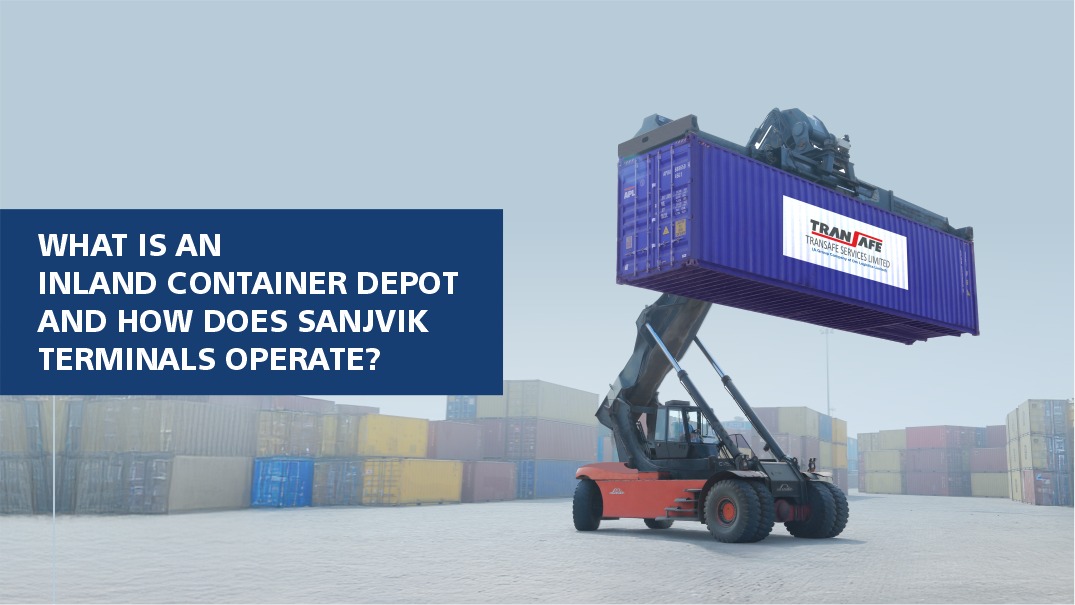
What Is an Inland Container Depot and How Does Sanjvik Terminals Operate?
What Is an Inland Container Depot (ICD)?
An Inland Container Depot (ICD) is a designated facility located away from seaports that handles the movement, storage and documentation of EXIM containerized shipment. It functions as an extended arm of a port, enabling exporters and importers to manage containerized shipment closer to industrial hubs. ICDs in India operate under customs supervision and provide all the essential services required for international trade, allowing businesses to complete customs formalities without visiting a port. ICDs are especially important in industrial regions where manufacturing clusters are far from coastal areas.
How Do Inland Container Depots Function in the Supply Chain?
An ICD plays a structured role within the supply chain, supporting both export and import operations through standardized procedures. The inland container depot operation begins with receiving containers from various transport modes, including road and rail. After arrival, consignments undergo documentation checks, shipment examination and movement to dedicated handling zones.
Once processed, containers are stored, loaded or transported to a major seaport through multimodal transport solutions. ICDs also ensure efficient coordination among customs, freight forwarders and carriers, allowing businesses to manage international consignments from a central inland facility. This integrated approach reduces delays, supports regulatory compliance and strengthens supply chain management practices across industries.
What Are the Key Services Offered by ICDs?
Inland Container Depots (ICDs) provide an extensive range of services essential for global trade, including:
Container Handling
- Loading and unloading of containers with advance container handling equipments
- Movement of export and import consignments within secure warehousing facility
Customs Services
- On-site assessment
- Examination
- Clearance under customs supervision
Container Storage
- Short-term and long-term storage facilities as per the requirement
- Bonded and non-bonded warehouse space available for containerized shipment
Multimodal Transport Connectivity
- Coordination with road and rail networks
- Seamless transfers to and from ports
Documentation and Compliance
- Filing of export/import declarations
- Coordination with shipping lines and freight forwarders
These services enable ICDs to function as comprehensive dry ports supporting large and small businesses alike.
How Do ICDs Facilitate Customs Clearance and Container Storage?
A key advantage of using an inland container depot in India is the availability of complete customs-related processes away from crowded port locations. Customs officers stationed at ICDs supervise the examination, sealing and documentation of consignments. This decentralization minimizes congestion at major seaports and improves processing times.
In addition to clearance, ICDs provide organized container storage zones equipped with handling equipment and secure infrastructure. Containers can be safely stored before movement to ports, ensuring controlled, efficient flow throughout the supply chain.
Why Are ICDs Called Dry Ports?
ICDs are often referred to as dry ports because they perform nearly all functions of a seaport except for handling vessels. They manage customs procedures, container freight operations and multimodal transport activities in inland locations. By replicating port-like facilities far from coastal regions, dry ports help businesses consolidate and dispatch consignments without entering congested port premises.
How Do ICDs Help Decongest Major Seaports in India?
India’s major seaports handle significant container volumes, leading to frequent congestion. ICDs play a crucial role in reducing this pressure by:
- Allowing exporters and importers to complete customs documentation inland
- Storing containers before they reach the port
- Facilitating smoother onward movement through rail and road connectivity
- Reducing truck traffic around ports
This system improves turnaround times for vessels and enhances overall efficiency within the national logistics network.
Overview of Sanjvik Terminals: A Leading ICD in Northern India
Sanjvik Terminals, located in Bawal, located in the key industrial zone in Haryana, is positioned as one of the emerging ICDs in Northern India. Its location near NH-48 and the industrial clusters provides strategic access to manufacturers and exporters. The facility supports multimodal transport facility, customs-supervised handling and efficient movement of containerized shipment for a wide range of sectors.
What Infrastructure and Technology Does Sanjvik Terminals Use?
Sanjvik Terminals has invested in infrastructure designed to support precise inland container depot operation. Key features include:
- A well-planned 5 Acres of Container stacking yard
- High-capacity handling equipment such as reach stackers
- Secure storage areas for different categories of containers
- Automated Container movement Systems through Reach Stackers, Hydra’s Cranes and Forklifts
- 100% power back up with proper lighting facility
- Administrative building with in-house Customs
How Does Sanjvik Terminals Ensure Efficient and Secure shipment Handling?
Efficient container handling at Sanjvik Terminals is supported by:
- Skilled operational teams
- Standardized processes for receiving, storing and dispatching containers
- Safety protocols adhering to regulatory guidelines
- Real-time monitoring systems to maintain operational integrity
Security measures include controlled entry points, surveillance systems and compliance-driven operations that ensure each consignment is managed with precision.
What Role Does Sanjvik Terminals Play in Supporting India’s Industrial Zones?
The Bawal region is surrounded by major industrial hubs such as Manesar, Rewari and Dharuhera. Sanjvik Terminals reduces transit distance to seaports for these manufacturing clusters by providing inland container depot operations at a nearby location. This proximity minimizes turnaround times, supports timely export cycles and strengthens supply chain performance for businesses operating in the region.
How Does Sanjvik Terminals Enhance Export and Import Operations?
The facility supports EXIM operations through:
- Streamlined handling processes
- Customs-supervised clearance
- Multimodal transport options connecting to major seaports
- Structured container storage facilities
- Coordination with carriers and freight forwarders
These services help ensure that consignments move through each stage of the supply chain without unnecessary delays.
What Are the Advantages of Using Sanjvik Terminals for Logistics?
Businesses gain multiple advantages when using Sanjvik Terminals, including:
- Reduced travel to distant key ports
- Faster documentation and clearance
- Modern infrastructure for container handling
- Improved cost efficiency across multimodal transport
- Reliable support for supply chain management activities
What Are Future Expansion Plans for Sanjvik Terminals?
Sanjvik Terminals aims to enhance capacity, introduce additional technological systems and expand its operational infrastructure to support growing demand from industrial clusters. Planned developments include yard expansion, increased equipment capacity and further integration with multimodal logistics channels that connect to major seaports.
How to Engage Sanjvik Terminals for Your Logistics Needs?
Businesses seeking inland container depot services can connect with Sanjvik Terminals through its dedicated customer service and documentation support teams. The facility assists with container handling, customs processes, multimodal transport arrangements and structured guidance throughout the EXIM cycle to ensure smooth supply chain operations.